
Every so often someone emails me worried that their hair-loss treatment is a heart drug. They're half right. Minoxidil started life in the 1970s as a pill for severe high blood pressure, and the hair growth was a side effect researchers noticed along the way. I've been following minoxidil since it was first approved for hair loss, and the blood pressure question has never gone away.
The short version: topical minoxidil, used as labeled, has very little effect on blood pressure in healthy people, but "very little" is not "none." Oral minoxidil at hair-loss doses is a different conversation. Here's what the studies actually measured, so you can judge your own situation with your doctor.
Why a hair product can touch your heart at all
Minoxidil relaxes the small muscles in artery walls by opening potassium channels. Wider arteries mean lower blood pressure. The body responds to that drop by speeding up the heart and holding on to salt and water. That's why the high-dose blood pressure pill carries strong warnings about a racing heart, fluid retention and, rarely, fluid around the heart (pericardial effusion), and why it's usually prescribed alongside other drugs to counter those effects.
When you apply minoxidil to your scalp, only a small fraction gets into the bloodstream. A detailed review in Drug Design, Development and Therapy (Suchonwanit et al., 2019) notes that serious whole-body effects are uncommon with topical use. Absorption can rise, though, if the scalp is broken, sunburned or inflamed, or if far more product is used than the label directs.
Topical minoxidil: the one study that looked closely at the heart
Most topical minoxidil trials checked blood pressure in passing. One small study went further. In 1988, Leenen and colleagues randomized 35 healthy men with hair loss to topical minoxidil (20 men) or placebo (15 men) for six months and measured their hearts with ultrasound. Their findings, published in the British Journal of Clinical Pharmacology:
- Blood pressure did not change.
- Heart rate rose by about 3 to 5 beats per minute.
- Cardiac output (how much blood the heart pumps per minute) and left ventricular mass increased modestly compared with placebo.
The authors concluded that short-term use was likely not harmful in healthy people, but that safety still needed to be established for people with coronary artery disease and for heart-muscle changes over years of use. That nuance rarely makes it into articles on this topic. It's a small, old study using the 2% strength, and the decades since have not produced a wave of heart problems among topical users, but it's the honest reason the label tells people with heart disease to ask a doctor first.
Oral minoxidil: what the newer studies show
Low-dose oral minoxidil has become a common off-label prescription for hair loss. "Low" is relative: hair-loss doses are a fraction of blood pressure doses, but far more drug reaches the bloodstream than with topical use. Three recent studies are worth knowing.
The largest safety review
A multicenter study of 1,404 patients in the Journal of the American Academy of Dermatology (Vañó-Galván et al., 2021) found that the most common side effect was unwanted hair growth elsewhere on the body (15.1%). Heart and circulation effects were uncommon: lightheadedness in 1.7%, fluid retention in 1.3% and a fast heart rate in 0.9%. About 1.2% stopped because of a whole-body side effect, and no life-threatening events were seen. The limits: it looked back at records, it had no control group, and side effects may be under-recorded that way.
24-hour heart and blood pressure monitoring
A Brazilian group fitted men taking oral minoxidil for hair loss with 24-hour heart monitors and blood pressure cuffs, before treatment and again months later. In their earlier group of 30 men, they found no relevant changes. When 11 of those men moved to a higher-than-usual hair-loss dose, average 24-hour heart rate climbed from about 73 to 81 beats per minute, while blood pressure stayed steady and no one developed low blood pressure (Sanabria et al., Anais Brasileiros de Dermatologia, 2024). That's a very small study, but it shows the pattern you'd expect from the drug's mechanism: the heart speeds up a little before blood pressure moves.
Fluid around the heart
Because the blood pressure pill can cause pericardial effusion, researchers at UC Irvine used bedside ultrasound to check 51 alopecia patients on low-dose oral minoxidil and 49 who weren't taking it. Small effusions showed up at the same rate in both groups (5.8% vs 6%), and none caused symptoms (Kincaid et al., Journal of Drugs in Dermatology, 2024). Reassuring, but again a small sample.
Side by side
| Topical minoxidil | Low-dose oral minoxidil | |
|---|---|---|
| How much reaches the blood | A small fraction | Much more, though far less than blood pressure doses |
| Blood pressure | No change in the controlled study | Usually little change in healthy people; can drop in some |
| Heart rate | Slight rise (3 to 5 beats per minute) in one small study | Small rise is common; fast heartbeat reported in about 1 in 100 |
| Fluid retention | Rare | Reported in about 1 in 75; more likely at higher doses |
| Who decides | Over the counter, but ask a doctor first if you have heart disease or take blood pressure medicine | Prescription only, off-label; your doctor sets the dose and monitoring |
For a fuller comparison of effectiveness, see our guide to oral vs topical minoxidil.
Who should talk to a doctor before starting
Ask a doctor or dermatologist before using any form of minoxidil if you:
- Have heart disease, a heart rhythm problem or a history of heart failure
- Take medicine for high blood pressure, or already run low blood pressure
- Have kidney disease, which affects how the body handles salt and water
- Are pregnant or breastfeeding
If you take blood pressure medicine, topical minoxidil is not automatically off limits, but your doctor should know, because the effects can add up.
Warning signs to act on
The product label for topical minoxidil tells you to stop and see a doctor if you notice chest pain, a rapid heartbeat, faintness or dizziness, sudden unexplained weight gain, or swelling of the hands or feet. The same signs matter on oral minoxidil, plus new shortness of breath, which can signal fluid build-up. Puffiness around the eyes after starting oral minoxidil is also worth mentioning to your prescriber.
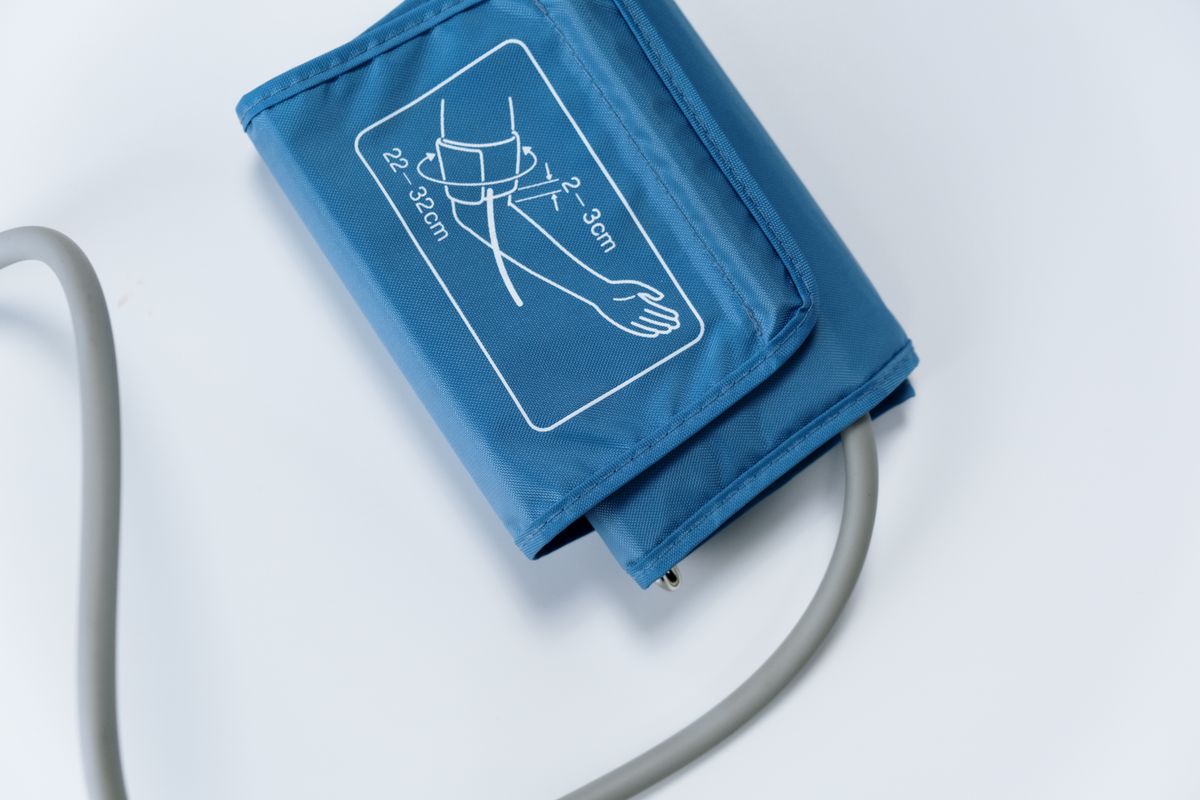
If you'd like reassurance, a home blood pressure cuff is inexpensive. Taking a few readings before you start and again after a few weeks gives you and your doctor real numbers instead of guesses.
The bottom line
For most healthy adults, topical minoxidil used as directed is a low-risk way to treat pattern hair loss, and the blood pressure worry is mostly a leftover from its origins as a heart pill. The studies do show small, measurable effects on heart rate, which is exactly why people with heart conditions should check first. If you use a topical, a precise applicator such as our Regenepure Precision 5% Minoxidil Spray helps keep the product on the thinning scalp rather than running onto your face. Oral minoxidil can work well for the right patient, but that decision, the dose and the follow-up belong with your doctor or dermatologist. Our minoxidil safety guide covers the other side effects, including the one most people forget: keeping it away from pets.
This article is for information only and is not medical advice. Talk to a doctor or dermatologist before starting or stopping any treatment.